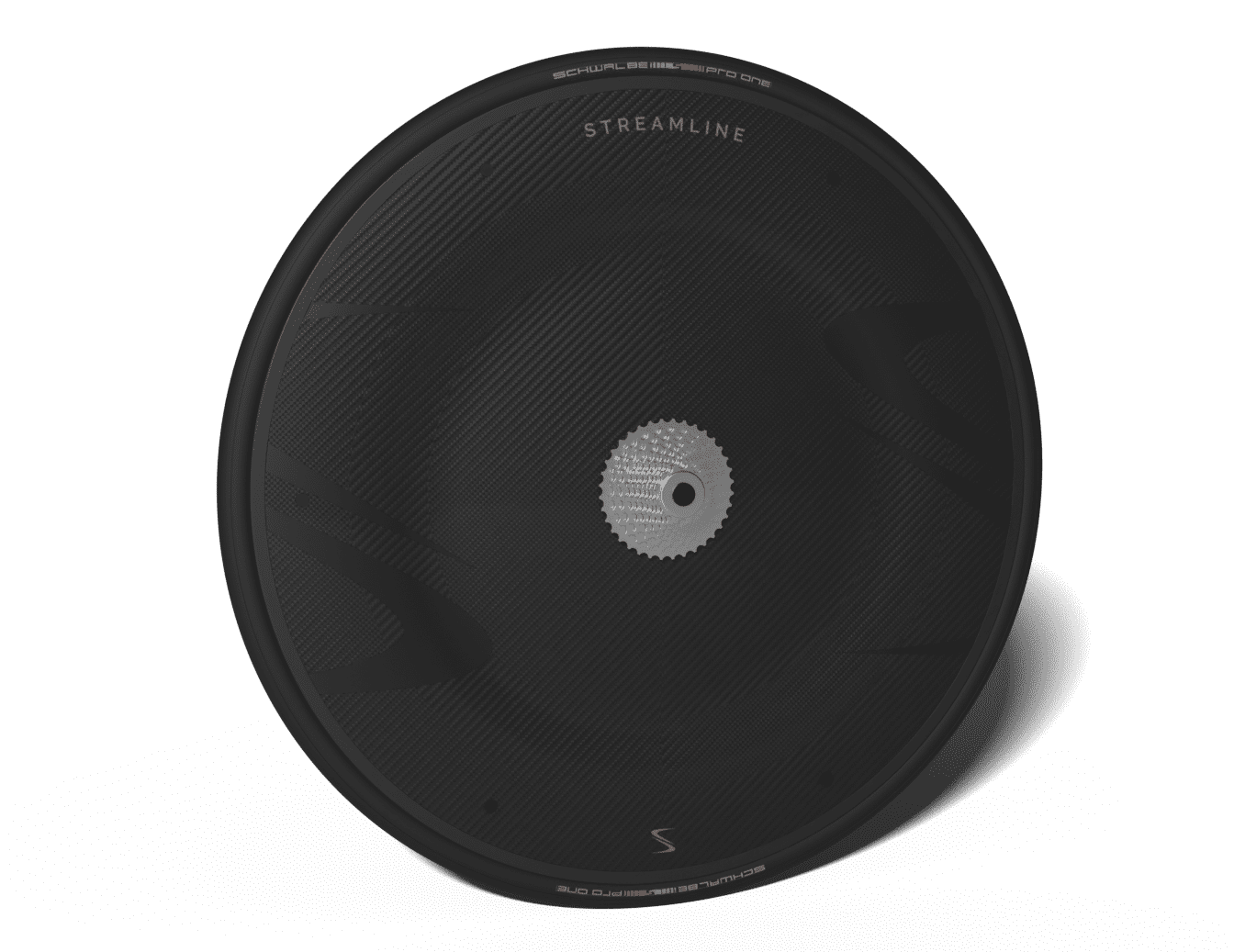
Disc wheels are faster than traditional shallow spoked wheels in all conditions and faster than deep section wheels in almost all conditions. They achieve this by improving airflow around the rear wheel. This means the drag of the rider and the bike is reduced.
When riding a disc wheel for the first time, it can feel slightly unstable in windy conditions. It is not uncommon to be pushed around in windy conditions, much more than a deep section wheel. However, once you understand how the bike handles in these conditions and how the wind strikes the wheel, you will feel more confident riding a disc wheel.
Unfortunately, disc wheels have a downside, and that is crosswinds. Courses or events that are subject to strong crosswinds often affect the rider using these types of wheels. Since the disc wheel acts as a sail, strong side winds can cause unstable handling and ultimately slow the rider. However, if the crosswinds come at less than 45 degrees, it can sometimes benefit the rider, again acting as a sail and propelling the rider forward.
When riding on the flat, a disc wheel is always going to outperform a deep section wheel. Since the disc is solid and smooths the airflow around the rear of the bike, you will see your speed increase slightly over a deep section wheel. However, in windy conditions (especially crosswinds), you may find our 64mm deep covers to be faster, depending on how much wind there is and the angle it is hitting the bike at. Hilly area over rolling terrain, a disc wheel will always be faster. However, if you are riding up longer climbs, the added weight may cost you time. So, for climbs longer than 3km, a deep section wheel will be lighter and still offer close aerodynamic benefits. Comparing disc wheel vs deep section, you will find that while the disc wheels are faster on flat and rolling terrain, they are relatively slow when you start riding uphill for long periods.